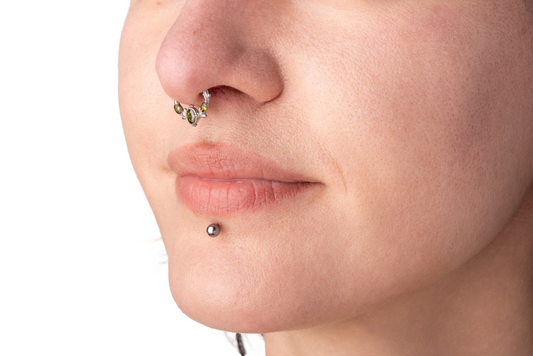
Body piercings and modifications often exist at the intersection of self-expression and risk, but there are some piercings that push that boundary further than others. While many piercings are widely accepted and relatively low-risk, others spark ongoing debate within the piercing community due to their potential side effects, healing complications, and long-term damage.
If you're drawn to unconventional piercings or have a fascination for the more intense modifications, we'll break down some of those most controversial piercings: what they are, why they're debatable, and what to consider before getting one.
What Makes a Piercing Controversial?
The term "controversial" doesn't necessarily mean that a piercing is impossible. However, it insinuates that the risk of the piercing overrides the "look" or achievement of the piercing. Many APP certified and professional piercers will not perform these piercings due to their higher risk for complication and long-term damage.
A piercing is typically labeled controversial when it:
- Has a high risk of rejection or migration
- Cause cause severe damage to teeth, gums, or tissue
- Interferes with natural movement or anatomy
- Is frequently refused by reputable piercers
Snake Eyes/Frog Eyes
The "snake eyes" piercing is placed horizontally through the tip of the tongue, connecting both sides with a curved barbell so that the ends resemble snake eyes.
Similarly, frog eyes consist of a single piercing that's placed horizontally over the top of the tongue, away from the tip. It connects both side of the tongue with a curved barbell and is designed to mimic frog eyes.
Risks and Concerns:
This style of piercing is widely discouraged by reputable piercers. It binds two independent tongue muscles together, which can restrict natural movement. Over time, it may lead to:
-Increased risk of speech difficulties
-Constant contact with teeth cause cause chipping, enamel wear, and gum recession
-Rejection or long-term discomfort
Many professional piercers and organizations refuse to perform these piercings altogether due to the high risk of complication.
Even though it's visually striking, the snake and frog eye piercings comes with significant risk that outweighs its aesthetic appeal.
Alternative:
If you're seeking a non-traditional oral piercing, two vertical tongue piercings (on either side of the tongue) can mimic the look of snake or frog eyes, without the risk to muscle tissue.

Smiley Piercing (Upper Frenulum)
The smiley piercing goes through the thin piece of tissue connecting your upper lip to your gums (the frenulum). It's usually only visible when you smile, hence the name.
Risks and Concerns:
This piercing is popular for its subtle and playful look, but it's not without issues:
- The frenulum is very thin and can tear easily
- Jewelry easily rubs against teeth and gums, leading to gum recession and enamel erosion
This piercing is cute and discreet, but it's often temporary and can disrupt the health of the teeth and gums rapidly.
Alternative:
The vertical philtrum piercing (a vertically placed piercing that goes through the center of the top lip), is a great alternative to the smiley piercing because it features a small bead at the bottom of the lip AND does not enter the mouth (eliminating the risk of tooth and gum damage).
Finger, Hand, and Wrist Dermal
Dermal piercings (also called single-point piercings) can be placed almost anywhere on the body, but placements on the hands, fingers, and wrists are especially contentious.
Risks and Concerns:
These areas experience constant movement, friction, and exposure, making healing and maintenance difficult. Dermal piercings already have a higher risk of rejection, and being placed in an area of the body with high exposure leaves them vulnerable.
Common issues include:
- High rejection rates
- Frequent snagging and irritation
Alternative:
Opt for a dermal location in a flat, low-movement area with moderate to thick tissue. Thick: nape of the neck, sternum, and the lower back.

When it comes to piercings, it's worth considering if your long-term health matters more than the look of a piercing. These piercings can be visually appealing, but they often come with trade-offs that aren't immediately obvious.
If you're considering one of these styles, take the time to:
- Consult an experienced, reputable piercer
- Understand the risks fully
- Think about long-term comfort and healing